

How to Build an Emergency Fund While Sticking to Your Budget
Life has a way of throwing unexpected curveballs when you least expect them. Whether it’s a sudden car repair, a medical bill, or a temporary gap in employment, learning how to build an emergency fund is the ultimate way to protect your financial security. Yet, when you look at your current monthly budget, it might feel like every single rupee or dollar is already accounted for.
Yet, when you look at your current monthly budget, it might feel like every single rupee or dollar is already accounted for. The idea of carving out an extra safety net can feel entirely overwhelming.
But here is the good news: building an emergency fund isn’t about suddenly finding a massive lump sum of cash. It is about creating a structured, repeatable habit within the budget you already have. Let’s break down exactly how to build an emergency fund “a cash cushion” systematically, without breaking your financial stride.
1. Define Your Target: How to Build an Emergency Fund Baseline
Before you save a single penny, you need a clear target. The standard financial rule of thumb is to save 3 to 6 months’ worth of essential living expenses.
Notice the keyword: essential. An emergency fund isn’t meant to replace your current lifestyle; it is designed to keep a roof over your head and food on the table if things go sideways.
To find your true number, look at your monthly budget and filter out the non-essentials. Focus strictly on your core survival numbers:
- Housing (Rent/Mortgage)
- Utilities (Electricity, Water, Internet)
- Groceries and basic sustenance
- Insurance premiums and critical debt minimums
If your rock-bottom baseline survival cost is ₹30,000 per month, a starter 3-month emergency fund target is ₹90,000. Knowing your exact number demystifies the process and gives you an achievable finish line.
2. Treat Knowing How to Build an Emergency Fund as a Fixed Expense
The biggest mistake people make is trying to save “whatever is left over” at the end of the month. In reality, there is rarely anything left over.
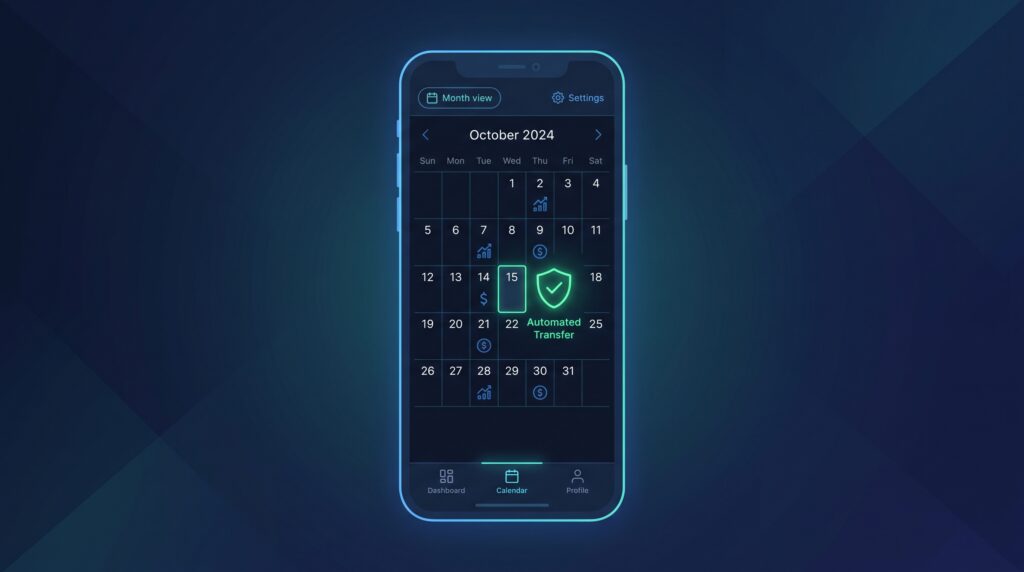
To break this cycle, you must shift your mindset: Pay yourself first. Treat your monthly emergency fund contribution exactly like your electricity bill or rent payment—it is a non-negotiable, fixed monthly line item.
Even if your budget only allows you to allocate ₹500 or ₹1,000 a month initially, write it directly into your budget spreadsheet at the start of the month. By automating this line item, you remove the decision-making fatigue entirely.
3. The “Micro-Budgeting” Strategy: Finding Hidden Cash
If your budget is incredibly tight, you don’t need to make drastic lifestyle changes. Instead, look for micro-savings. Small adjustments can add up to huge momentum over a 12-month period.
- Audit Subscriptions: Look at your bank statements from the last 90 days. Are you paying for streaming platforms, gym memberships, or software apps you haven’t touched in a month? Cancel them immediately and route that exact amount into your safety net.
- The “Round-Up” Habit: Many banking apps now offer automatic round-ups. If you buy a coffee for ₹180, the app rounds it up to ₹200 and automatically sends the remaining ₹20 to your savings account. It’s a completely painless way to build cash in the background.
4. Keep Your Safety Net Separate (Out of Sight, Out of Mind)
Never keep your emergency fund in your everyday transactional bank account. If you see that money sitting next to your weekend spending cash, the temptation to dip into it for non-emergencies will eventually win.
Open a separate account specifically for your safety net. Look for an account that offers:
- No monthly maintenance fees: You shouldn’t pay money just to store your safety net.
- High-Yield Savings: Keep your funds in a high-yield savings account or a sweep-in fixed deposit (FD) so that your money fights off inflation while remaining liquid.
- High Liquidity: You need to be able to access this money within a few hours if a true emergency strikes. Avoid locking it in volatile market mutual funds or multi-year locked tax-saver instruments.

5. The Liquid Asset Allocation Framework (The 70-30 Rule)
To keep your money safe yet functional, you should partition your target emergency fund using a strict low-risk tiering system. Because an emergency fund’s primary purpose is absolute capital preservation and instant availability, high-risk assets like direct equity, stocks, or volatile mutual funds must be kept at 0%. Here is how to allocate your total target emergency fund (e.g., your 3 to 6 months of living expenses):
- 70% in Absolute Ultra-Low Risk / Instant Liquidity Assets: Where it goes: Split this portion between your primary high-yield savings account (35%) and a sweep-in Fixed Deposit (FD) or multi-option deposit scheme (35%).
- The Purpose: This forms your immediate first line of defense. If an emergency happens at 2:00 AM on a Sunday, this cash can be withdrawn via an ATM or transferred instantly through net banking with zero delay or exit penalties.
- 30% in Low-to-Medium Risk / T+1 Liquidity Assets: Where it goes: Allocate 20% into ultra-short-duration Liquid Mutual Funds (which invest strictly in high-quality government securities and overnight commercial papers) and 10% into physical gold or Sovereign Gold Bonds (SGBs) as a long-term inflation hedge.
- The Purpose: This acts as your second line of defense for larger expenses (like a major medical procedure or prolonged job loss). These assets typically take 24 to 48 hours (T+1 or T+2 settlement) to convert back into liquid cash in your bank account, but they help your stagnant cash fight off inflation in the background.
|
Asset Class |
Target Allocation |
Risk Profile |
Liquidity Timeframe |
|---|---|---|---|
|
Savings Account / Cash |
35% |
Ultra-Low |
Instant (24/7) |
|
Sweep-in Fixed Deposits (FD) |
35% |
Ultra-Low |
Instant (via banking app) |
|
Liquid / Overnight Funds |
20% |
Low |
1 Working Day (T+1) |
|
Gold / Safe Hedges |
10% |
Medium (Price Fluctuation) |
2–3 Working Days |
|
Direct Equity & Crypto |
0% |
High Risk (Avoid Entirely) |
Non-Viable for Emergencies |
6. What Counts as a True Emergency?
As your fund begins to grow, understanding how to build an emergency fund also means knowing when to protect it. Remember, this safety net is a structural insurance policy, not a vacation fund or a shopping budget holiday.
Before tapping into your funds, ask yourself these three regulatory questions:
- Is it unexpected? (A routine car service or annual insurance premium is not an emergency; those should be planned budget lines. A blown radiator or sudden medical event is an emergency.)
- Is it necessary? (Does delaying this expense threaten your health, safety, or ability to earn an income?)
- Is it urgent? (Does it need to be paid right this second, or can it wait until next month’s paycheck?)
The Bottom Line
Building a financial safety net is a marathon, not a sprint. The psychological peace of mind that comes from having even ₹25,000 stashed away in a dedicated account is massive. It shifts your financial posture from playing defense to sitting in complete control.
Don’t wait for the perfect financial situation or a massive salary hike to get started. Review your monthly budget today, pick an achievable micro-amount, and automate your very first transfer. Your future self will thank you.
Also read:
- What Happens to Your SIP When Market Falls 40%?
- US-Iran Peace Deal: Inflation Impact on Rate Cuts in 2026
- Market Volatility: 3 Reasons Indian Investors Shouldn’t Panic
- SIP vs Lumpsum: Which is Better for You?
Statutory Financial Disclaimer
This article is for strictly educational, informational, and financial awareness purposes only. It does not constitute formal financial, investment, legal, or tax advice. Budgeting structures and saving strategies should be tailored to individual financial situations. For further official guidance on basic financial literacy and retail investor investor protection policies, you can visit the regulatory frameworks updated directly on the main Securities and Exchange Board of India (SEBI) portal or explore investor education initiatives outlined by the National Stock Exchange of India (NSE). Investment in financial instruments and securities markets involves inherent risks; please consult a qualified financial professional or SEBI-registered investment advisor before making structural changes to your personal financial portfolio.

At Gyani Turtle, we believe every Indian deserves access to honest, jargon-free financial education. Our team simplifies investing, mutual funds, and personal finance — so you can build real wealth, one smart decision at a time. Not SEBI registered. For educational purposes only.