
SpaceX’s Trillion-Dollar IPO: Opportunity, Hype, and the Risks Investors Can’t Ignore
SpaceX IPO speculation is no longer just a Wall Street side story. It has become one of the biggest global investing debates of 2026.
If the latest reporting and filing-related disclosures are accurate, Elon Musk’s rocket, satellite, defense, and AI infrastructure empire is preparing one of the most ambitious public listings ever attempted. The numbers being discussed around the SpaceX IPO are staggering: a potential valuation between $1.75 trillion and $2 trillion, and a possible capital raise in the $50 billion to $75 billion range.
That would put SpaceX into a rare category before most public investors even get a chance to read a full prospectus: a private company asking the market to value it like one of the world’s most important technology platforms.
The key question for investors in the US, Europe, India, and every other market is simple: is the SpaceX IPO a once-in-a-generation infrastructure opportunity, or is it trying to price in too much of the future at once?
The Numbers That Define This Moment
|
Data Point |
Reported Figure |
Investor Meaning |
Status |
|---|---|---|---|
|
Potential IPO valuation |
$1.75T-$2T |
Would place SpaceX near the world’s largest public companies |
Reported |
|
Possible capital raise |
$50B-$75B |
Could become the largest IPO raise ever |
Reported |
|
Saudi Aramco IPO benchmark |
$29.4B raised in 2019 |
SpaceX could be more than 2x larger by raise size |
Historical |
|
2025 SpaceX revenue |
About $18.7B |
Used by analysts to frame valuation multiples |
Reported |
|
2025 adjusted EBITDA |
About $6.6B |
Suggests strong operating scale, but not enough alone to justify hype |
Reported |
|
xAI / orbital AI angle |
SpaceX-linked AI infrastructure ambitions |
Expands the story, but also raises execution risk |
Filing-based reporting |
Note: IPO terms can change quickly. Final valuation, offer size, timing, ticker, float, and index eligibility should be verified from official filings before any investment decision.
Why the IPO Story Is So Powerful
The market loves companies that own the infrastructure layer.
Microsoft owns cloud and enterprise software. Nvidia owns the AI accelerator bottleneck. TSMC owns advanced chip manufacturing. Amazon owns logistics and cloud infrastructure. SpaceX wants investors to believe it owns something even broader: access to orbit, global satellite connectivity, defense-grade space networks, and potentially AI infrastructure beyond Earth.
That is why the SpaceX IPO story is so explosive.
SpaceX is not being valued like a traditional aerospace contractor. Traditional aerospace companies sell aircraft, launch services, engines, defense systems, or maintenance. SpaceX is being framed as a multi-layer platform:
Launch services through Falcon and Starship.
Recurring connectivity through Starlink.
Military satellite infrastructure through defense contracts.
Future logistics and heavy-lift capacity through Starship.
AI infrastructure through the reported xAI integration and orbital data-center ambitions.
If even half of that stack works, SpaceX deserves a premium. If all of it works, the company could become one of the defining infrastructure businesses of the next decade.
But if the IPO price assumes all of it works perfectly, investors may be paying tomorrow’s valuation today.
The xAI Twist Changes the Valuation Framework
The most important change in the SpaceX story is not just Starship. It is AI.
Recent reporting says xAI has been folded into the broader SpaceX story, and SpaceX’s IPO-related documents reportedly discuss AI chips, data centers, and orbital AI infrastructure. That matters because it changes how investors are being asked to value the company.
A launch company can be valued using launch cadence, gross margin, government contracts, and reusable rocket economics.
A satellite internet company can be valued using subscriber growth, average revenue per user, churn, capacity, and replacement cost.
An AI infrastructure company is different. It needs chips, power, cooling, data centers, model training capacity, software talent, and massive capital expenditure. It competes indirectly with Nvidia customers, hyperscalers, cloud providers, and sovereign AI programs.
That is both the opportunity and the problem.
If SpaceX can combine launch economics, Starlink connectivity, and AI compute demand, the company may own a very unusual infrastructure stack. But the filing-related risk language around chip access and orbital AI should not be ignored. AI ambitions can expand the total addressable market. They can also burn capital faster than investors expect.
What Global Investors Should Watch Before Buying
For US investors, the most important issue is valuation discipline. If SpaceX prices near $2 trillion, it will not enter the market as a misunderstood growth story. It will enter as a mega-cap company expected to execute like a monopoly, a cloud platform, a defense prime, and an AI infrastructure provider at the same time.
For European investors, the key issue is access and portfolio role. Many European investors may get exposure through global funds, investment trusts, ETFs, or brokerage platforms rather than direct IPO allocation. The question becomes whether SpaceX deserves to replace existing aerospace, defense, AI, or satellite exposure.
For Indian and other international investors, the practical question is route and currency risk. If SpaceX lists in the US, exposure may come through overseas brokerage accounts, international mutual funds, ETFs, or global technology funds. The investment case must be judged not only in dollars, but also after currency movement, taxation, and platform costs.
For all investors, four things matter most:
- Final IPO valuation and dilution.
- Starlink revenue quality and profitability.
- xAI-related cash burn and chip dependency.
- Governance and related-party exposure across Musk-linked companies.
The Contrarian View: This May Be Too Much, Too Soon
The bullish case is obvious. SpaceX has execution history, brand power, government trust, reusable launch capability, and a global satellite network.
The bearish case is more uncomfortable: SpaceX may be trying to go public at the exact moment when every attractive future story is being priced in together.
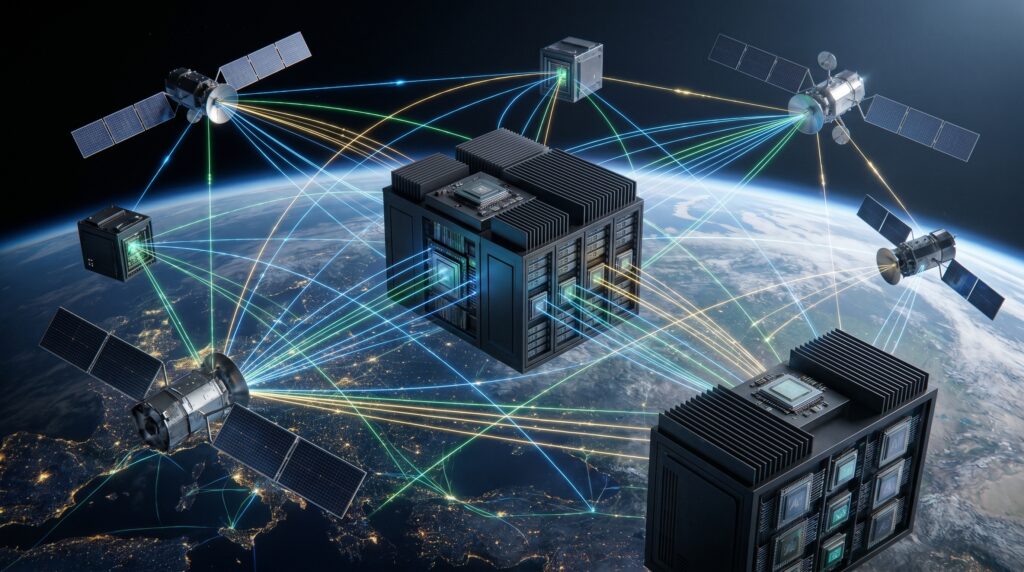
Starship is not yet a mature commercial transport system. Orbital AI data centers are technically unproven. xAI is competing in a brutally expensive market against better-capitalized AI ecosystems. Starlink still needs constant satellite replacement and regulatory approval across jurisdictions. Defense contracts are attractive, but they come with oversight, delivery obligations, and political risk.
Then there is the valuation multiple. If the SpaceX IPO values the company around $1.75 trillion against reported 2025 revenue of roughly $18.7 billion, investors are not buying a cheap infrastructure asset. They are buying a company whose future must be enormous to justify the starting price.
The contrarian argument is not that SpaceX is weak. It is that even extraordinary companies can become poor investments if the IPO price assumes perfection.
The Passive-Investment Claim Needs Caution
Some commentary around the SpaceX IPO has suggested that index inclusion could eventually force huge passive inflows from retirement accounts, 401(k)-linked vehicles, global index funds, and benchmark-tracking portfolios.
That argument is possible, but it should not be treated as guaranteed.
Index inclusion is not automatic on listing day. It depends on float, liquidity, profitability standards, governance rules, committee decisions, listing structure, and timing. Even if SpaceX eventually enters major indices, passive buying would likely arrive in stages rather than all at once.
Investors should treat passive flows as a possible tailwind, not the investment thesis.
Data Verification
|
Claim |
Current Reading |
Reliability |
|---|---|---|
|
SpaceX IPO valuation could reach $1.75T-$2T |
Reported by major financial and technology outlets |
Medium-high, but final terms pending |
|
Capital raise could reach $50B-$75B |
Reported by market coverage and analyst commentary |
Medium, subject to pricing |
|
xAI is central to the new SpaceX story |
Supported by recent reporting and filing analysis |
Medium-high |
|
Orbital AI/data center strategy is commercially proven |
Not proven |
Low |
|
Passive index money will automatically absorb the float |
Speculative |
Low |
The Gyani Turtle Take

SpaceX may become one of the most important public companies in the world. The business touches launch, broadband, defense, AI, chips, and future orbital infrastructure. Very few companies have that kind of strategic surface area.
But investors should separate admiration from allocation.
The right approach is not to ask, “Is SpaceX an amazing company?” It probably is. The better question is: “At the IPO price, how much future success am I already paying for?”
If the valuation is reasonable, SpaceX could become a core global infrastructure holding. If the valuation is stretched, even long-term believers may get a better opportunity after the first wave of IPO excitement fades.
Watch the filing. Watch the float. Watch Starlink margins. Watch xAI cash burn. Watch Starship cadence. The SpaceX IPO price will tell a story on day one, but the business will prove itself over years.
Sources consulted: External references for this analysis include Reuters/Investing.com coverage of SpaceX IPO reporting, TechCrunch coverage of SpaceX and xAI, Kiplinger coverage of SpaceX IPO expectations, Tom’s Hardware reporting on SpaceX AI hardware disclosures,
Also Read:
- Beyond Rockets: How Defense Contracts and Bitcoin Could Shape SpaceX’s Financial Future 2026
- US-Iran Peace Deal: Inflation Impact on Rate Cuts in 2026
- SIP vs Lumpsum: Which is Better for You?
- What Happens to Your SIP When Market Falls 40%?
Disclaimer: This article is for educational and informational purposes only and does not constitute investment advice, financial advice, or a recommendation to buy or sell any security. SpaceX IPO terms may change, and final investment decisions should be based on official filings, personal risk tolerance, and advice from a qualified financial professional.

At Gyani Turtle, we believe every Indian deserves access to honest, jargon-free financial education. Our team simplifies investing, mutual funds, and personal finance — so you can build real wealth, one smart decision at a time. Not SEBI registered. For educational purposes only.